Every SaaS product with real customers collects more ideas than it can build. Some requests are excellent, some fit a different product, and some solve a problem for one account while adding cost for everyone else. Sooner or later, the product team has to say no.
Most teams find that harder than the decision itself. They delay the reply, write a vague "we'll keep it in mind", or let the request collect votes on a public board. Each costs more trust than a clear, polite no.
This guide covers when a no is the right answer, how to word it, and how to handle declined requests on a public roadmap so customers feel heard even when the answer is not what they wanted.
Quick Answer
To say no to a feature request without losing the customer, reply quickly, thank them for the specific problem they described, give the real reason in one or two sentences, and offer the best available alternative or workaround. Avoid "maybe later" when you mean no. Record the decision with the evidence behind it so you can revisit it if demand changes, and tell the customer what would make you reconsider. A clear no, given early and explained honestly, keeps more trust than a request left open indefinitely.
Why "Maybe Later" Hurts More Than No
A soft maybe feels kind in the moment. In practice it creates three problems.
First, the customer plans around a feature that is not coming. They may delay a workaround, renew on a false assumption, or tell their own team it is on the way.
Second, your backlog fills with items nobody intends to build. Every review meeting re-reads them, and every new teammate asks about them.
Third, the eventual disappointment arrives later and lands harder. A customer who hears "not on our roadmap" in week one can adjust. A customer who discovers it after six months of follow-ups feels misled.
Des Traynor of Intercom made this point in his essay Product strategy means saying no: good ideas always come with reasons to say yes, and a cohesive product depends on turning most of them down.
When No Is the Right Answer
Not every request deserves a no, and not every no is permanent. A short checklist helps the team decide consistently instead of by mood or by who asked loudest.
A request is usually a no when:
A request is usually a "not now" when the evidence is promising but thin, when a dependency has to land first, or when the team simply has higher-value work queued. "Not now" is honest only if you will actually look at it again. Put a review date next to it.
If you need a repeatable way to compare requests, a feature prioritization matrix scores ideas against the same criteria every time, which makes a no easier to defend and easier to explain.
Separate the Problem From the Proposed Solution
Customers often describe a solution: "add a CSV export to the reports page". Behind it there is a problem: "my finance team needs these numbers in their spreadsheet every Friday".
Before you decline, ask one question about the underlying problem. You will sometimes find that the product already handles it, that a small change would solve it, or that several other customers share the same need in a different form. You can say no to the proposed solution while saying yes to the problem.
This also changes the tone of the reply. "We won't build that exact feature, but here is how teams solve the Friday report today" lands far better than a flat refusal.
How to Write the Reply
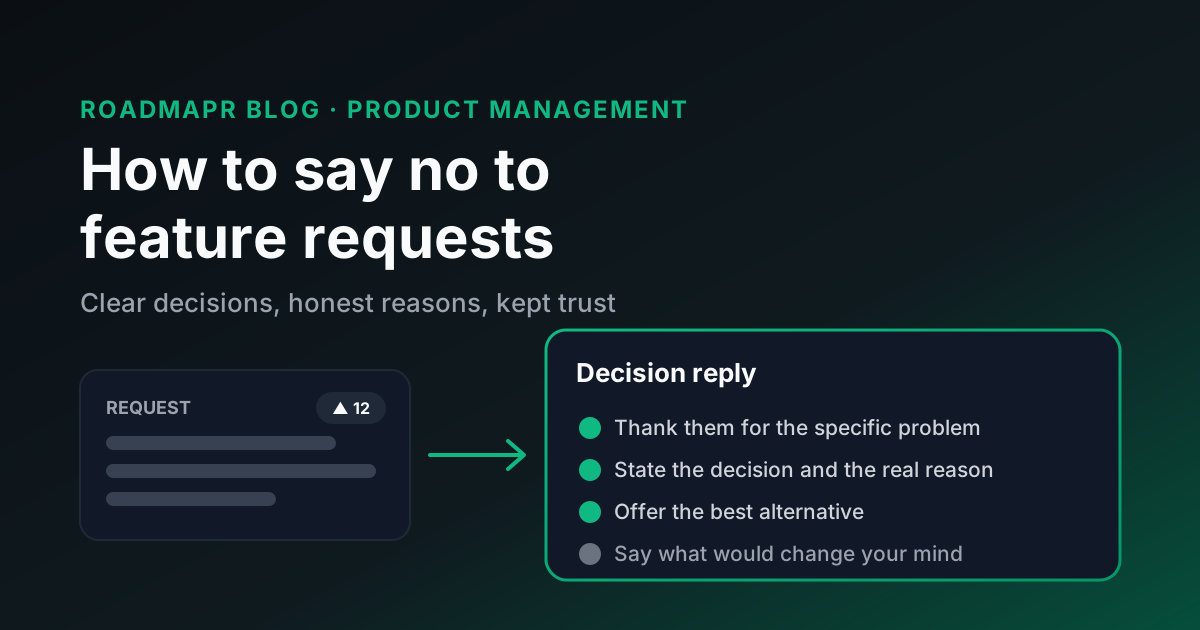
A good decline message is short, specific, and human. It has five parts:
Template: declining a request that doesn't fit the product
"Thanks for explaining how your team handles approvals across three locations. That helped us understand the problem. We have decided not to build multi-level approval chains, because the product is focused on small teams with a single approver and that feature would add complexity for most customers. For now, several customers handle this with a shared checklist before the final approval step. If we see this need across many teams of your size, we will revisit it and let you know."
Template: "not now" with a review date
"Thanks for the request for a dark mode in the mobile app. We agree it would be useful, and a few customers have asked. We are not starting it this quarter because current work is focused on performance and reliability. We have marked it for review at our next quarterly planning, and we will update the request either way."
Handling Declined Requests on a Public Roadmap
Public roadmaps and feature voting boards make this harder and easier at the same time. Harder, because the request and its votes are visible to everyone. Easier, because one clear update reaches every voter at once instead of one email thread at a time.
A few habits keep a public board honest:
RoadmapR boards use four statuses: Under Review, Planned, In Progress, and Completed. There is no separate "Declined" status, so a request you will not build should not sit in Planned or Under Review indefinitely. Make the decision clear in your reply to the requester and in the item's description, and keep the board for work you genuinely intend to consider. The status hygiene checklist explains how to stop stale items from piling up.
Saying No to Internal Requests
Not every request comes from customers. Sales wants a feature to close one deal. Support wants a fix for a recurring ticket. A founder wants something they saw in a competitor's launch.
The same principles apply. Ask for the underlying problem and the evidence. Compare the request with the work already queued using the same criteria you use for customer ideas. If the answer is no, explain the trade-off in terms the requester cares about: "If we build this for one deal, the onboarding fix that affects every new account slips by a month."
Internal noes often go better when the roadmap and backlog are clearly separated. The backlog can hold every idea. The roadmap holds only what the team has chosen to pursue.
Keep a Decision Log
A simple log of declined requests saves time and protects consistency. For each one, record:
When the same request returns, you can answer quickly and consistently, and when the evidence changes you will notice.
Close the Loop When the Answer Changes
Sometimes a no becomes a yes. Your target market shifts, a dependency lands, or a pattern of requests builds up. When that happens, tell the people who originally asked. It is one of the strongest trust signals a product team can send, because it shows the original no was a considered decision rather than a brush-off.
A public changelog makes this easy. When the feature ships, link the entry to the original request and let voters know. The post on changelog marketing covers how to write those updates so they bring people back.
How RoadmapR Fits
RoadmapR gives SaaS teams one public place for feature requests, voting, roadmap status, and a changelog. Customers submit ideas and vote, and the team moves items through Under Review, Planned, In Progress, and Completed. It does not make product decisions for you: the judgment about what to decline, and how to explain it, stays with your team. If you are comparing options, see how RoadmapR feature voting works and review the plans.
FAQ
How do you politely say no to a feature request?
Thank the customer for the specific problem, state the decision plainly, give the real reason in a sentence or two, and offer the best alternative. Close with what would make you reconsider.
Should you tell customers why you declined their request?
Yes, in brief. A short, honest reason helps customers plan and shows the decision was considered. You do not need to share internal numbers or debate it at length.
Is it better to say "not now" or "no"?
Use "not now" only when the team will genuinely review the request again, ideally with a date. If the answer is no, say no. A false "not now" costs more trust later.
What should happen to declined requests on a public voting board?
Do not leave them open and collecting votes. Update the item with the decision and the reason, and keep the board for requests the team will actually consider.
Should the highest-voted features always be built?
No. Votes show demand from the people who use your board. Combine them with customer value, revenue impact, strategic fit, effort, and risk before deciding.
Ready to build your public roadmap?
Roadmapr gives you a public roadmap, feature voting, and a changelog in one place. Start on the Free plan and upgrade when your team grows.
Get Started Free